
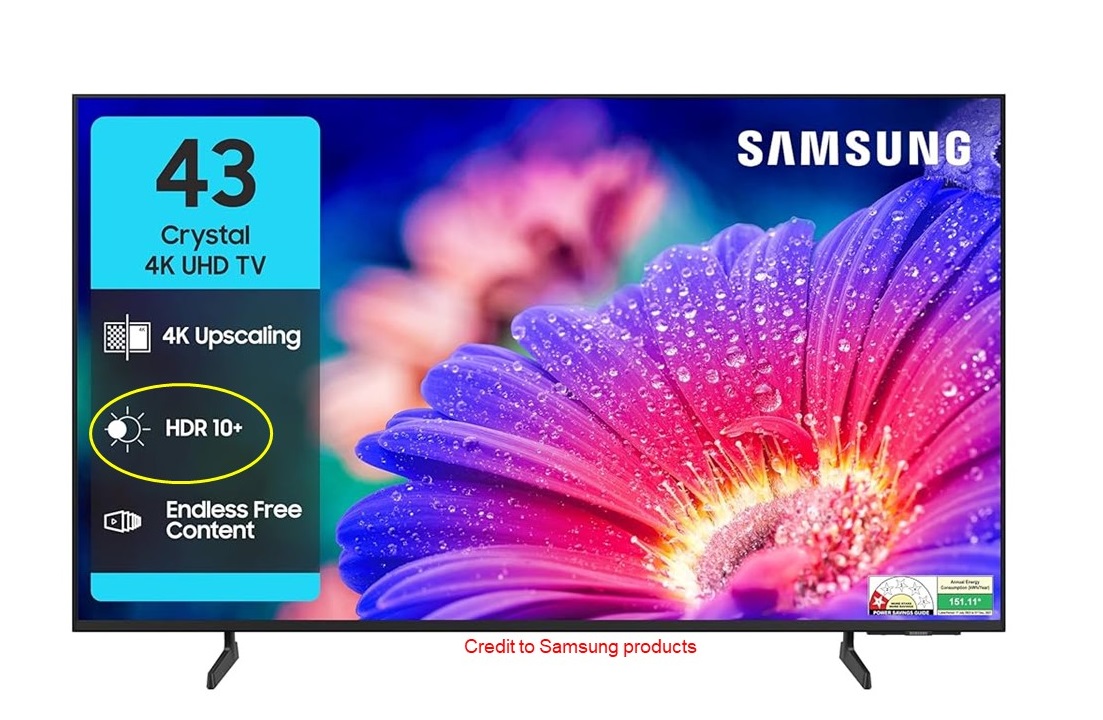
Imagine walking into a room where an artist is trying to paint the world using only a few crayons. No matter how skilled they are, sunsets look dull, shadows look muddy, and bright reflections turn into blank white patches. For decades, our televisions were like that artist limited tools trying to capture an unlimited world. Then came HDR (High Dynamic Range), and suddenly the artist received a full palette of light.
The World Outside the Window: Nature speaks in extremes. A sunlit beach can be thousands of times brighter than a shaded tree trunk. The night sky is millions of times dimmer than a candle flame. Yet our eyes glide across these contrasts effortlessly, thanks to their ability to adapt across a vast dynamic range. But early TVs could not do that. Their brightest white was only a few hundred nits, and their darkest black never truly reached darkness. So, scenes with strong light; a shining sword, the sparkle on a river got washed out. The magic vanished.
When Engineers Challenged Light: In this regard, scientists and engineers wondered: What if a screen could mimic the physics of real light? The answer required more than brightness. The screen needed:
Using technologies like OLEDs, quantum dots, and refined LED backlights, they built displays capable of outputting light the way objects in nature emit or reflect it. Suddenly, a TV could produce intense glints without crushing details, and shadows that still held texture. This new capability was named High Dynamic Range.
The Moment the Picture Woke Up: When filmmakers started using HDR, something curious happened. A flicker of fire looked layered. Neon lights glowed as if sending photons into the room. A storm cloud felt heavy because subtle gray variations were preserved. It wasn’t a trick; it was physics meeting biology. HDR aligns with how your eyes actually perceive brightness: not linearly, but logarithmically, meaning small changes in dark regions matter enormously. HDR gives screens the finesse to paint those changes.
Why It Feels So Real: In a way, HDR did not make TVs brighter; it taught them how to speak the native language of light. It restored contrast, expanded color, and brought back the nuances our eyes expect from the real world. That’s why an HDR image does not just look different, it feels alive, as if your screen finally opened its window to the physics outside.
No comments yet. Be the first to comment!

Changing hair color feels exciting like trying on a new version of yourself. From bright reds to ...
View now
Anyone who has walked or driven on a scorching summer afternoon has seen...
View now
The Science and Wonder of Soap B...
View now