
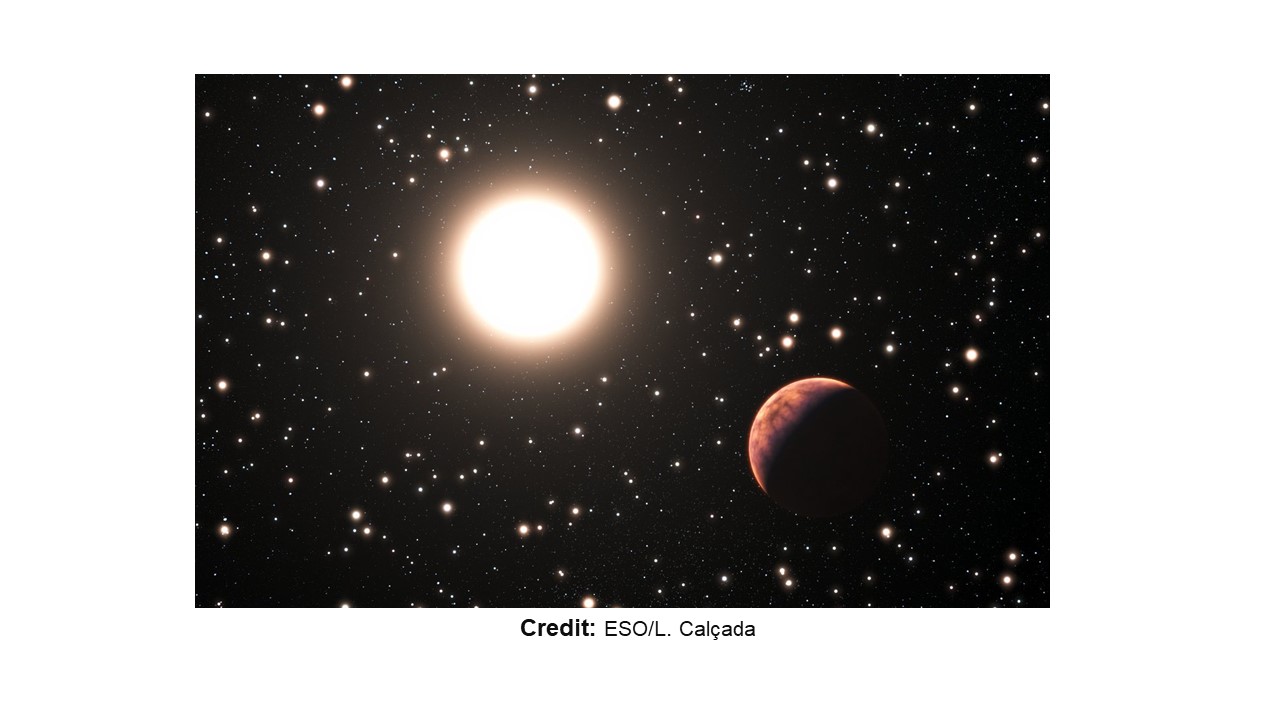
On a quiet night, when you look up at the sky, the stars seem to whisper. They blink, shimmer, and dance as though each one carries a distant heartbeat. It feels almost personal, yet the explanation is grounded in elegant physics and surprisingly, in our own human way of seeing the universe. Most stars you see are not tiny at all. Many are far larger than our Sun some dozens, some hundreds, and a few even thousands of times bigger in diameter. Giants like Betelgeuse or Rigel could swallow our Sun millions of times over. But distance rewrites their story. These colossal furnaces sit so far away that their immense size collapses into a minute point of light by the time it reaches Earth. Their power is reduced to a fragile ray entering our atmosphere.
Here the real story begins.
As this single, thin beam of starlight enters Earth's atmosphere, it encounters constantly moving pockets of air warm rising currents, cool sinking layers, humidity shifts, turbulence created by winds. Every such layer has a slightly different refractive index, meaning it bends light differently. Because stars appear as a single-point source, their narrow beam is extremely sensitive to these fluctuations. Each wiggle of air nudges the light off course, altering its brightness and color from moment to moment. This is stellar scintillation, the scientific name for twinkling. A simple way to visualize it: imagine looking at a bright coin at the bottom of a swimming pool. The coin doesn’t move, but the water’s ripples distort it constantly. Our atmosphere does the same to starlight.

(Credit : Freepik)
Now compare this with the Sun. The Sun appears large in the sky not because it is the largest star, but because it is the closest to us. Its disk occupies a wide angle, sending a huge bundle of rays toward us. Even if the atmosphere bends some rays, thousands of others arrive unaffected, smoothing out any flicker. That is why the Sun (and planets like Venus and Jupiter) shines steadily, while faraway stars tremble. In a way, this mirrors human experience. The things closest to us feel steady, familiar, and bright. The things far away distant dreams, distant people, distant galaxies appear fragile, flickering, shaped by the layers in between. Science doesn’t diminish the emotion; it deepens it. For teaching, this simple sky observation unlocks several powerful scientific ideas:
The twinkle of a star is not a flaw; it is a message. It tells us our atmosphere is alive. It tells us the universe is vast. It reminds us that even the largest stars can appear delicate when viewed across light-years. And above all, it shows that even a simple, childlike question“Why do stars blink but the Sun doesn’t?” can open a gateway to some of the deepest truths in physics and human perspective.
No comments yet. Be the first to comment!

Changing hair color feels exciting like trying on a new version of yourself. From bright reds to ...
View now
Imagine walking into a room where an artist is trying to paint the world...
View now
Anyone who has walked or driven on a scorching summer afternoon has seen...
View now