
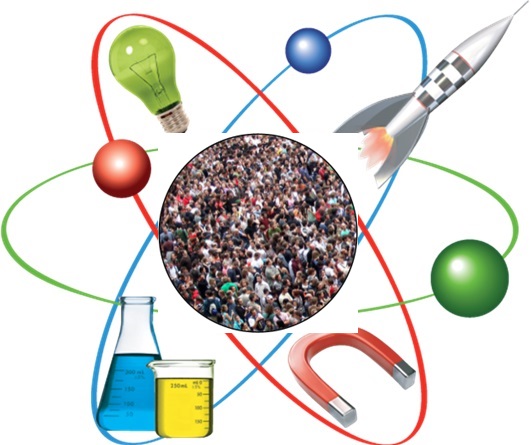
Science matters to everyone because it quietly shapes almost every moment of our daily lives, however nearly 75% people underestimate it simply because they do not notice it working in the background. In addition, when something becomes too common like electricity, clean water, smartphones, medicines etc. then we stop thinking about the science that makes it possible. This familiarity creates the illusion that science is distant, very complicated and for special people, even though it is deeply connected to ordinary human experience.
A key reason people ignore science is that it often feels abstract, full of concepts, equation and complex logics when taught in classrooms. Concepts like atoms, evolution, and climate systems cannot be touched or seen directly, so they seem less “real” than everyday experiences. For example, someone may trust a home remedy over a doctor’s advice because the remedy feels familiar, even if science clearly shows what works. This gap between personal experience and scientific evidence often leads people to undervalue scientific thinking. Another factor is overload. Modern life moves fast, and people sometimes feel they do not have the time or energy to explore scientific explanations. When a phone works, they do not ask how the Battery, Wi-Fi, semiconductor etc. inside functions. When weather changes abruptly, they may not think about atmospheric physics. This disconnect makes science appear like something “extra” rather than something essential. A good everyday example is boiling water. But even an educated person rarely wants to think and engage with such activities. Most people do it without thinking. But behind that simple act lies thermodynamics, heat transfer, vapor pressure, and material properties of the vessel. Science is present, but invisible. Because of this invisibility, people assume life runs on common sense, when in reality, it runs on scientific principles. Another realistic example is the COVID-19 pandemic. People who understood basic scientific concepts viral transmission, immunity, statistical risk; were able to make informed decisions. Those who lacked scientific literacy were more easily misled by rumors and misinformation. This shows how scientific knowledge directly influences personal safety and social behavior. There is also a human tendency to prefer simple explanations over complex ones. Scientific reasoning often requires patience, evidence, and uncertainty, although social media offers quick, emotional answers. This makes science feel slow and sometime very difficult, even though it remains the most reliable way to understand reality.
To change this perception, science must be communicated with empathy, demonstration, and simplicity in classes as well as in public forums. When people see science as a tool for solving real problems like improving health, creating sustainable materials, growing food efficiently, or predicting natural disasters they begin to appreciate its value. At its core, science is a human activity driven by curiosity and the desire to improve life. When presented in relatable ways, it becomes clear that science is not something separate from humanity, but something that enriches it every single day. “I believe educators and teachers must go beyond mere syllabus completion to achieve real scientific awareness among the public.”
AMB November 22, 2025
Great job
Well explained, logical

Public accountability in sci...
View now
Every year, people celebrate the birth of tiny dog puppies symbols of jo...
View now
The culture and civilization of India directly and indirectly influenced...
View now