
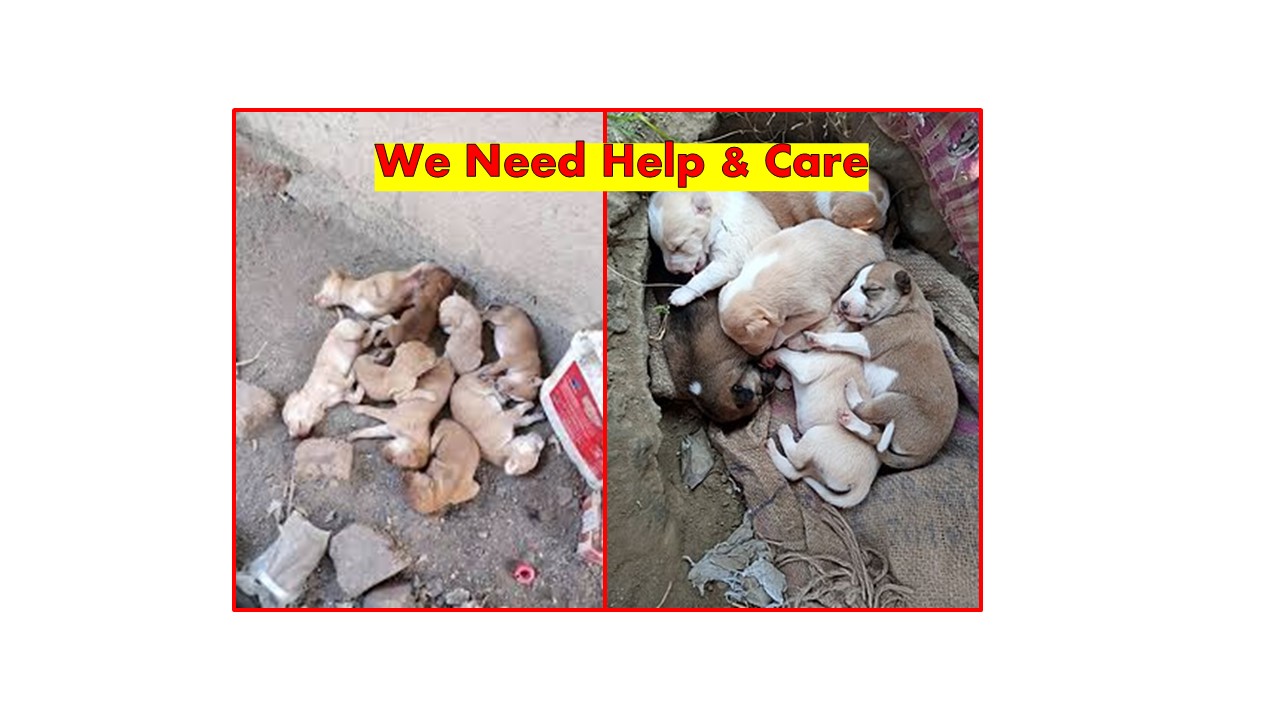
Every year, people celebrate the birth of tiny dog puppies symbols of joy, loyalty, and new life. Yet behind this happiness lies a quiet and largely unseen reality: a large number of puppies never survive their first few weeks. In many parts of India and other developing regions, veterinarians and animal welfare groups report that 40-60% of puppies die before one month of age, and in unmanaged street or backyard settings, the number can be even higher.
This is not because puppies are “weak by nature.” Science tells a different story
Puppies are born with almost no immunity of their own. For the first days of life, their survival depends entirely on their mother’s first milk, called colostrum, which provides protective antibodies. When puppies fail to receive enough colostrum due to large litters, weak newborns, or sick mothers their bodies are left defenseless against infections. Disease is a major killer. Parvovirus, distemper, herpesvirus, and bacterial infections spread rapidly where hygiene is poor and vaccination is absent. A single infected puppy can wipe out an entire litter within days. These diseases are preventable, yet remain common due to lack of awareness and veterinary care. Environmental stress adds another deadly layer. Newborn puppies cannot regulate body temperature. Cold nights, rain, or damp floors can quickly lead to hypothermia, low blood sugar, and dehydration; a combination veterinarians call the “neonatal death triad.” This is especially common among street dogs and rural households. The health of the mother dog is equally critical. Malnutrition, heavy parasite load, stress, and repeated unplanned pregnancies weaken mothers, reducing milk quality and maternal care. Inbred or poorly bred dogs may also give birth to puppies with congenital defects that prevent survival.
Why should the public care?
Because this is not only an animal issue; it reflects public responsibility, public hygiene, and public compassion. High puppy mortality increases stray populations through repeated breeding, fuels the spread of zoonotic diseases, and highlights gaps in basic veterinary awareness. The good news is that this crisis is largely preventable. Simple steps timely vaccination, deworming, clean shelter, thermal protection, and proper nutrition of mother dogs can reduce puppy deaths to below 10%, as seen in well-managed environments. Saving puppies does not require advanced technology—: only knowledge, empathy, and collective action.
Five things the we can do to reduce puppy deaths
by Mishra Anitanjali
No comments yet. Be the first to comment!

Public accountability in sci...
View now
The culture and civilization of India directly and indirectly influenced...
View now
Science matters to everyone because it qu...
View now