
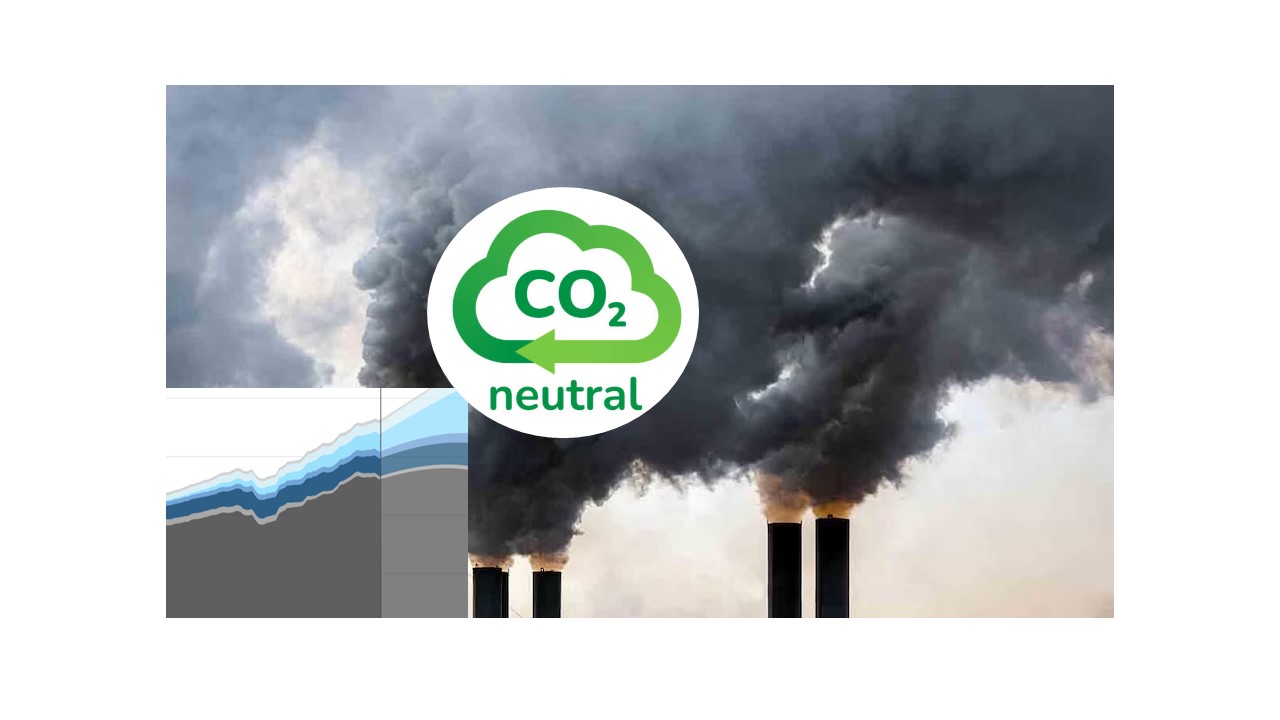
At present; across the world, the phrase “CARBON ZERO” is becoming a powerful guiding idea for governments, industries, communities, and everyday people. But what does it actually mean, why is it urgently needed, and how will it impact all of us?
Carbon Zero simply means balancing the amount of carbon dioxide released into the atmosphere with the amount removed or absorbed. When we burn fuels, use electricity from coal, drive vehicles, run factories etc., carbon dioxide is released. Over decades, these emissions have built up in the atmosphere and acted like a thermal blanket around Earth, trapping heat. This is the main driver of climate change. The consequences are already visible: rising temperatures, unpredictable monsoons, extreme heatwaves, droughts, floods, crop failures, thinning Himalayan glaciers, and declining air quality. For the common person, this translates to higher electricity bills, health issues, increased food prices, damaged homes, and a more stressful climate for future generations. These everyday impacts make the transition to Carbon Zero not just an environmental necessity, but a social and economic one.
Achieving Carbon Zero means reducing emissions as much as possible and offsetting the rest through clean technologies and natural solutions. This includes solar and wind power, electric vehicles, energy-efficient appliances, green buildings, sustainable farming practices, and restoring forests and ecosystems. The benefits of moving toward Carbon Zero are surprisingly wide. First, cleaner air. Many respiratory problems, especially in children and the elderly can be reduced by cutting carbon emissions and the particulate pollution that comes with them. Second, more stable weather. Reducing greenhouse gases helps slow extreme climate patterns, protecting crops, water sources, and daily life. Third, economic growth. New jobs in renewable energy, battery technology, waste-to-energy plants, and green materials are creating a modern workforce with better stability and long-term prospects. Fourth, improved national security. Nations that rely heavily on imported oil or gas become more resilient when energy comes from domestic solar, wind, or biomass.
Most importantly, the Carbon Zero movement encourages a mindset change: the shift from careless consumption to responsible use of resources. Small everyday habits play a big role saving electricity, reducing waste, choosing public transport, supporting eco-friendly products, and planting trees. When millions of people take small steps, the collective impact becomes extremely powerful. Reaching Carbon Zero is not a challenge for scientists and governments alone. It is a shared responsibility between industries, farmers, students, homemakers, workers, and communities. Every household can contribute by conserving energy, using cleaner fuels, reusing materials, and supporting green initiatives. Achieving a Carbon Zero future means protecting our health, strengthening our economy, preserving nature, and ensuring that our children inherit a planet that remains livable, stable, and beautiful. The path is challenging, but the rewards are immense and the need has never been greater. Together, we can turn the idea of Carbon Zero into a global reality that benefits everyone.
No comments yet. Be the first to comment!

Rechargeable batteries are essential to modern society, quietly enabling...
View now
Quantum computers represent one of the most profound shifts in the histo...
View now
Graphene: The Strongest Material Ever Discovered...
View now