
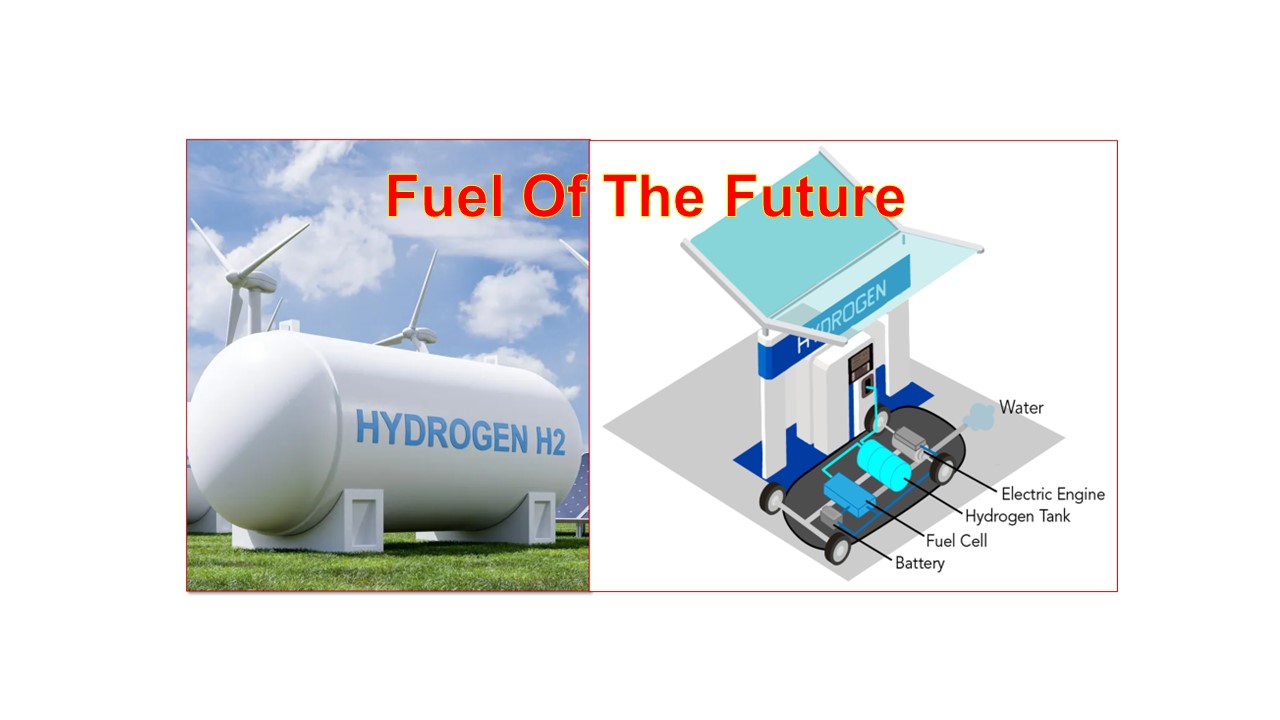
Modern society runs on a wide mix of fuels petrol, diesel, natural gas, coal, and electricity from various sources. These fuels have powered industries, transport, and homes for decades, but they come with clear limitations. Fossil fuels release large amounts of carbon dioxide, contributing to climate change. Oil prices fluctuate, and coal-based systems generate pollution that affects health and air quality. Even today’s battery technologies, though clean at the point of use, face limits in long-distance transport, heavy industries, and large-scale energy storage. In this landscape, scientists and policymakers are seeking a fuel that is clean, versatile, and capable of supporting future energy needs at scale. This is where hydrogen stands out (Fig.1). It is the lightest element, carries high energy per unit mass, and when used in a fuel cell, produces only water as the by-product. These features make hydrogen an attractive candidate for powering heavy trucks, industries, power plants, and even aviation in the long run. In this way, hydrogen like fuel is very important for country like India whose energy need mostly depends on others.
Fig.1 Hydrogen as alternative of petrol, diesel, natural gas, coal etc.
Types of Hydrogen & Their Origin
Hydrogen is produced through several pathways, each with different environmental impacts.
So, these types form the foundation of a growing hydrogen economy, where the aim is to gradually transition from grey to green hydrogen as technologies become cheaper and renewable electricity expands.
Challenges on the Road Ahead: Although hydrogen offers remarkable advantages, it also faces scientific and practical hurdles. Producing green hydrogen requires large amounts of renewable power, and current electrolyzers are still costly. Hydrogen molecules are very small and can escape easily, making storage and transport technically demanding. Compressing and liquefying hydrogen needs energy and specialized materials, and large-scale pipelines or refueling networks are still under development. These challenges mean that hydrogen adoption must be supported by strong research in materials, catalysts, storage systems, and large infrastructure planning.
Safety: Managing a High-Energy Fuel: Hydrogen is powerful, but with proper engineering it can be handled safely. It ignites easily, so modern systems use sensitive leak detectors, ventilation designs, and automatic shutdown technologies. Hydrogen disperses rapidly upward, reducing the risk of dangerous buildup. High-pressure tanks used in vehicles and industries undergo strict testing for impact, temperature, and fatigue. Global safety standards are now in place for storage sites, pipelines, and refueling stations, making hydrogen systems comparable in safety to natural gas facilities. Hydrogen is not a miracle fuel, but it is a strong candidate to complement renewable power and reduce dependence on fossil fuels. With ongoing advances in production, safer materials, and efficient infrastructure, hydrogen is shaping up to be a major pillar of the clean-energy future.
No comments yet. Be the first to comment!

Rechargeable batteries are essential to modern society, quietly enabling...
View now
Quantum computers represent one of the most profound shifts in the histo...
View now
Graphene: The Strongest Material Ever Discovered...
View now